Table of contents
- 1. The unveiling of a marvel and the forgotten debacle
- 2. Premature political lock-in: building before calculating
- 3. Project management success vs. project product success: Baccarini's framework
- 4. The myth of the Hiding Hand vs. the iron law
- 5. Quantifying a historic cost and schedule overrun
- 6. When the Sydney syndrome strikes SMBs
- 7. Four operational safeguards to protect your deliverables
- Streamline your project scoping with FluidOps
- Frequently asked questions
1. The unveiling of a marvel and the forgotten debacle
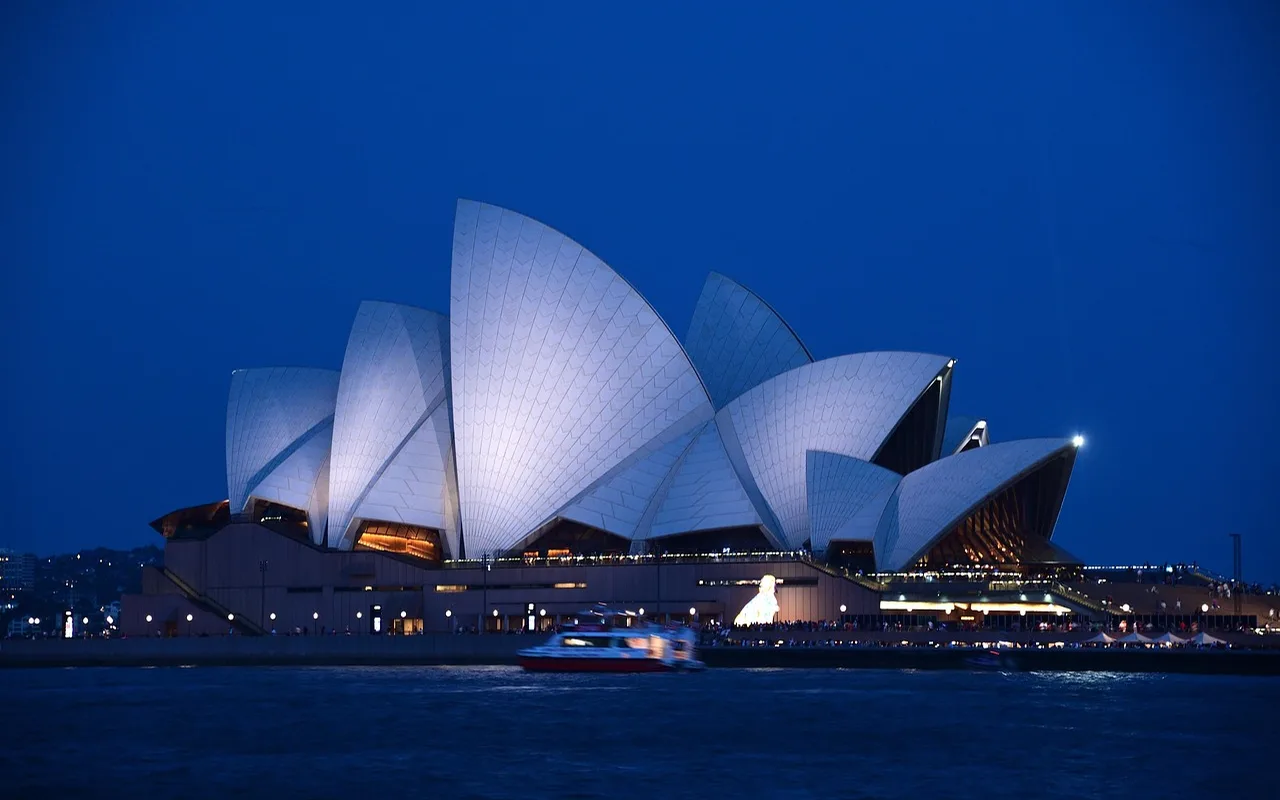
On October 20, 1973, beneath radiant southern skies, Queen Elizabeth II officially opened the Sydney Opera House. A crowd of one million spectators lining the harbour cheered the pristine concrete shells resting on Bennelong Point, appearing like a flotilla of white sails set to put to sea. Acclaim poured in for this masterpiece of modern architecture, destined to become the undisputed symbol of Australia. Yet in the official grandstand, one seat remained conspicuously empty: that of Danish designer Jørn Utzon, forced off the site seven years earlier following a bitter political dispute.
Behind the visual splendour lies one of the twentieth century's most resounding operational failures. At its official launch in 1957, the New South Wales government promised an opening date in January 1963 with a total budget envelope of 7 million Australian dollars. The venue eventually opened more than a decade late, carrying a final price tag of 102 million Australian dollars (Murray, 2004). This net overrun of 1,357%—a multiplier exceeding fourteen—earned the landmark an unenviable spot in the Guinness World Records for the largest proportionate cost escalation in civil construction history.
This dramatic gap gave rise to a recognized concept in management science: the "Sydney Opera House paradox." British urban planner Peter Hall first conceptualized this contradiction as a "positive planning disaster" (Hall, 1980). How could a project that violated every elementary rule of project management—catastrophic budget drift, an obliterated schedule, the architect's acrimonious departure, and severe acoustic compromises—establish itself in hindsight as a worldwide functional, cultural, and economic triumph? For business leaders, it is tempting to view this saga as a romantic parable where ultimate genius retroactively excuses early amateurism. Doing so ignores the unforgiving mechanics that pushed the project to the brink of collapse.
2. Premature political lock-in: building before calculating
To grasp how the breakdown unfolded, one must trace the timeline back to the initial decision to break ground. In 1957, the international competition jury selected Jørn Utzon's striking concept sketches. Yet these drawings reflected purely intuitive sculptured forms: no structural load studies, no material strength calculations, and no geometric equations backed the sails suspended over the harbour. The engineering had to be invented from scratch.
At this juncture, a fateful political calculation occurred, later analyzed by Bent Flyvbjerg under the framework of deliberate "political lock-in" or design by deception (Flyvbjerg, 2005). The Premier of New South Wales, John Joseph Cahill, faced a precarious position ahead of the 1959 state elections. Realizing that the opposition party would instantly scrap the expensive scheme if elected, Cahill made a devastating managerial call: he ordered foundation concrete to be poured at Bennelong Point on March 2, 1959, well before engineers had resolved any structural equations for the roofs.
The motive was strictly political: engineer a physical point of no return so that abandoning the initiative would become financially and publicly untenable. This psychological trap of escalating commitment, examined in our research on the sunk cost fallacy, triggered a destructive domino effect:
- Demolition of premature foundations: Because the exact weight of the future roofs remained unknown when the podium was poured, the support columns proved unable to bear the massive concrete shells designed later. Crews were forced to jackhammer away substantial sections of underwater foundations and rebuild them at astronomical expense.
- Four years of mathematical deadlock: Acclaimed engineering consultancy Ove Arup & Partners had to harness some of Europe's earliest digital computers to model Utzon's parabolic shells. Only in 1961 did Utzon arrive at the "spherical solution," which involved cutting every roof component from the surface of a single, uniform geometric sphere (Murray, 2004).
- The divorce of design from execution: Building the base while still inventing the superstructure prohibited any standardized manufacturing sequence. Every phase of construction devolved into a bespoke, rush-built prototype.
Premier Cahill died suddenly just months after construction began, leaving his successors with an empty shell, an obsolete initial quote, and an expanding financial abyss.
3. Project management success vs. project product success: Baccarini's framework
The Sydney case demands a fundamental distinction that every project director must master to assess operational health. In a seminal paper in the Project Management Journal, researcher David Baccarini established a clear dividing line between two frequently conflated concepts: project management success and project product success (Baccarini, 1999).
Breaking the iron triangle
Project management success addresses the traditional "iron triangle": meeting the agreed schedule, staying within the allocated budget, and satisfying the initial technical requirements. This is a time-bound, internal operational metric that concludes on handover day. By this standard, the Sydney Opera House stands as one of the most comprehensive debacles in modern industrial history.
Project product success, by contrast, evaluates the strategic long-term outcomes generated by the resulting asset: adoption by end users, brand value, overall lifecycle profitability, and societal benefit. On this front, Sydney's return is staggering. An independent assessment conducted by Deloitte Access Economics estimated the economic, cultural, and brand value of the Opera House at 11.4 billion Australian dollars for the national economy alone. Five decades of tourism revenue and diplomatic prestige have long since repaid the painful 1973 bill.
The hidden fallout of rushed execution
Does this imply that management discipline was irrelevant? Far from it. Popular retellings tend to smooth over uncomfortable realities in praise of a "masterpiece." In truth, schedule slippages and open political conflict driven by the newly appointed Minister for Public Works, Davis Hughes, compromised the building's core mission (Gaim et al., 2022).
Following Utzon's forced resignation in 1966, the site was handed over to a consortium of Australian architects tasked with emergency cost-cutting. The main hall, originally planned for grand opera with staging volumes proportioned for lyric theatre, was hastily reconfigured into a symphonic concert hall. Opera was relegated to the smaller venue, fitted with an undersized orchestra pit and constrained stage machinery whose deficient acoustics frustrated world-class performers for nearly half a century. Rectifying these legacy design flaws required tens of millions in additional investment through 2022. The initial project management breakdown extracted a lasting toll on functional performance.
4. The myth of the Hiding Hand vs. the iron law
Confronted with these jarring figures, some economic thinkers attempted to reframe management failure as a creative virtue. In 1967, economist Albert O. Hirschman introduced "The Principle of the Hiding Hand": human beings providentially underestimate project obstacles, arguing that if true complexity and full costs were known at the outset, ambitious human undertakings would never be launched (Hirschman, 1967). Initial ignorance supposedly serves as a beneficial catalyst, forcing project teams to unlock extraordinary adaptive creativity to overcome the unexpected.
The Malevolent Hiding Hand and retrospective illusion
This romantic interpretation was vigorously contested by Bent Flyvbjerg and Cass Sunstein (2016). Analyzing comprehensive empirical datasets, they uncovered the reality of a "Malevolent Hiding Hand." While Sydney miraculously recovered thanks to a state-run lottery that fully settled the debt by 1975, the vast majority of ventures entered under deceptive assumptions end up as abandoned white elephants, public bankruptcies, or underperforming infrastructure (Flyvbjerg and Sunstein, 2016).
Flyvbjerg assembled a database of more than 16,000 megaprojects worldwide at the Saïd Business School in Oxford. His findings deliver an unequivocal verdict: only 0.5% of projects deliver on budget, on time, and with the promised benefits intact (Flyvbjerg and Gardner, 2023). Unforeseen artistic triumphs are anomalies; the baseline reality is the "iron law of megaprojects": over budget, over time, under benefits, over and over again (Flyvbjerg, 2014).
5. Quantifying a historic cost and schedule overrun
The Sydney Opera House overrun was neither an act of fate nor the result of freak weather conditions; it was driven step-by-step by fundamental governance breakdowns. The comparative table below outlines the massive divergence between the political narrative of 1957 and the reality delivered at the 1973 opening:
| Strategic parameter | Initial estimate (1957) | Delivered reality (1973) | Nature of the variance |
|---|---|---|---|
| Overall budget | A$7,000,000 | A$102,000,000 | Net overrun of 1,357% (factor of 14.5), absorbed by a dedicated public lottery. |
| Execution timeframe | 4 years (completion in January 1963) | 14 years (October 1973) | Delay of 10.5 years following a 4-year impasse over roof engineering. |
| Maturity level at launch | Competition sketches with no geometry | Full-scale industrial prototype | Total absence of a mathematical model when pouring the podium. |
| Project governance | Complete architect-client trust | Breakdown and litigation | Sudden ousting of Utzon in 1966; arbitrary reconfiguration of halls. |
| Opera acoustics | World-class lyric performance targeted | Cramped pit and severe compromises | Forced hall inversion: large hall for concerts, small hall for opera. |
This diagnostic table underscores an essential reality: projects started on fictitious estimates do not merely "drift" along the way; they painfully uncover their true cost over time. As robust project tracking frameworks demonstrate, early scoping discrepancies compound exponentially as cross-functional teams and interdependent workstreams are engaged.
6. When the Sydney syndrome strikes SMBs
It is easy to assume these patterns are confined to government cabinets, monumental public works, or deep-space exploration. In reality, growing companies run their own "Sydney Opera Houses" all the time. Whenever a business commits to a ground-up ERP overhaul, an infrastructure migration, or a complete product line redesign based on visionary intuition, the identical cognitive biases take over.
The Cahill illusion at company scale
The trap consistently snaps shut in the same fashion: an energetic founder approves an aggressive schedule based on an appealing rough figure floated in an informal meeting. Keen to "seize market share" and "stay ahead of competitors," leadership instructs teams to start building immediately. Outside vendors are booked, purchase orders are executed, and public delivery dates are shared with key accounts. The psychological lock-in is complete.
Weeks later, the technical team uncovers that company processes are undocumented, historical databases are corrupt, and the selected software stack cannot interface with existing infrastructure. Yet with €40,000 committed and three months invested, no stakeholder wants to hit the brakes. Escalation takes hold: teams build brittle workarounds, hire emergency contractors, and sink into endless crisis meetings.
The toll on teams and human capital
In a major conglomerate or government agency, such missteps are absorbed by renegotiated budgets or public deficits. In a small or mid-sized enterprise, the fallout hits immediately: depleted cash reserves, damaged customer relationships, high turnover among top performers, and burnout among project managers left to take the blame. As highlighted in our analysis of Brooks's Law, throwing additional personnel at a struggling initiative only compounds the delay.
7. Four operational safeguards to protect your deliverables
While Jørn Utzon's creative genius deserves recognition, his approach to project planning and scoping should never serve as a management benchmark. To shield your business initiatives from the Sydney syndrome, embed these four operational safeguards into your execution routines:
- Enforce a freeze until core risk is resolved: Never start production rollouts or writing production code until architectural unknowns are settled on paper. If you do not yet know how system components will integrate, building the foundation is pure waste. It is far better to delay kickoff by six months than to demolish structural work later.
- Systematically conduct pre-mortems: Before committing to a budget or signing a delivery timeline, gather your leadership team for a two-hour project pre-mortem session. Work from an uncompromising premise: "Imagine it is two years from now, the project has failed, we spent three times the budget, and the system is unusable. What went wrong?" Surfacing blind spots early neutralizes unchecked optimism.
- Break delivery into self-contained functional increments: Instead of committing to a twelve-month "black box" timeline, break value delivery down. Every iteration must yield a testable, measurable release. To explore this strategy, see why breaking down tasks boosts productivity and protects workflows from hidden dependencies.
- Maintain an explicit critical dependency log: Identify every single link whose failure would jeopardize the entire operational chain. Engineers at Ove Arup took four years to crack the roof geometry because constructability was not treated as a mandatory gating condition. Avoid this pitfall with your software integrations and external suppliers.
Streamline your project scoping with FluidOps
To keep strategic initiatives from turning into financial sinkholes, operational clarity must be established from the initial project brief. FluidOps organizes your workflows in an accessible, consolidated workspace: track critical milestones using our Gantt chart to safeguard dependencies, manage day-to-day tasks on a visual Kanban board, or run structured delivery cycles with dedicated Scrum views. The Eisenhower matrix and built-in flow balancing tools are included in our free tier, helping you prioritize urgent versus important tasks without unnecessary friction.
Our platform connects natively with your everyday calendar tools, including Google Calendar and Outlook, eliminating visibility gaps between high-level planning and daily execution. The free plan is available at €0 per month, the Individual plan is €12 per month or €120 per year, and the Enterprise plan starts from €12 per seat per month on annual billing. Review the full feature breakdown on our pricing page and provide your team with the visibility required to deliver on every commitment.
Frequently asked questions
Why did the Sydney Opera House cost 14 times more than originally budgeted?
The initial 7-million-dollar budget in 1957 was based on competition sketches that lacked engineering feasibility studies. Unforeseen structural challenges with the concrete shells, an absence of mathematical modeling tools, the required demolition of inadequate early foundations, and persistent inflation pushed the final bill to 102 million Australian dollars.
What is the Sydney Opera House paradox in project management?
The paradox describes the sharp contrast between an extreme project management failure (over 10 years late and a 1,357% cost overrun against the original iron triangle) and an extraordinary retrospective product success in terms of brand recognition, tourism revenue, and enduring economic return for Australia.
Why did Jørn Utzon resign before the project was finished?
In 1966, a newly elected state government under Public Works Minister Davis Hughes withheld Utzon's professional fees and challenged his interior design proposals. Exhausted by the adversarial political standoff, Utzon left Australia and never saw the finished complex in person.
How did the Australian government finance the massive budget overrun?
Rather than taking on sovereign debt or raising general taxation, the New South Wales government established a dedicated public lottery in the late 1950s (the Sydney Opera House Appeal Lottery). Ticket sales fully cleared the construction debt by 1975.
How can an SMB prevent a similar project overrun?
An SMB must avoid launching full-scale execution until core technical risks and critical dependencies are resolved on paper. Conducting pre-mortems, delivering through short functional increments, and maintaining visual tracking across delivery milestones protect teams against the planning fallacy.
Sources
- Baccarini, D. (1999). The logical framework method for defining project success. Project Management Journal, 30(4), 25–32. doi:10.1177/875697289903000405
- Flyvbjerg, B. (2005). Design by deception: The politics of megaproject approval. Harvard Design Magazine, 22, 50–59.
- Flyvbjerg, B. (2014). What you should know about megaprojects and why: An overview. Project Management Journal, 45(2), 6–19. doi:10.1002/pmj.21409
- Flyvbjerg, B., Bruzelius, N., & Rothengatter, W. (2003). Megaprojects and risk: An anatomy of ambition. Cambridge University Press. doi:10.1017/CBO9781107050891
- Flyvbjerg, B., & Gardner, D. (2023). How big things get done: The surprising factors that determine the fate of every project, from home renovations to space exploration and everything in between. Currency / Crown Publishing.
- Flyvbjerg, B., & Sunstein, C. R. (2016). The principle of the Malevolent Hiding Hand; or, the planning fallacy writ large. Social Research: An International Quarterly, 83(4), 979–1004. doi:10.1353/sor.2016.0063
- Gaim, M., Clegg, S., & Pina e Cunha, M. (2022). In praise of paradox persistence: Evidence from the Sydney Opera House project. Project Management Journal, 53(4), 397–415. doi:10.1177/87569728221094834
- Hall, P. (1980). Great planning disasters. Weidenfeld & Nicolson / University of California Press.
- Hirschman, A. O. (1967). The principle of the Hiding Hand. The Public Interest, 6, 10–23.
- Murray, P. (2004). The saga of Sydney Opera House: The dramatic story of the design and construction of the icon of modern Australia. Spon Press.